
Sitting at a desk all day is hard on the body. Many office workers feel stiff, tired, or sore by 5:00 PM. Humans are built to move, but modern work often keeps us glued to a chair. You do not need a gym at the office to stay healthy. Small, consistent actions can keep your blood flowing and your mind sharp. These minor shifts in your routine prevent long-term injury and boost your daily productivity. Staying active at work is about making movement a natural part of your professional life.
The Cost of a Sedentary Lifestyle
Sitting for long periods can lead to back pain and tight hips. This is often called postural strain. It slows your blood flow and may lead to brain fog. When you stay still, your muscles go into a resting state. This makes it harder for your body to manage blood sugar and burn fat. Breaking up these long periods of sitting is the best way to improve your metabolic health and avoid office neck pain.
Chronic sitting also impacts your mood. It can make you feel sluggish or irritable. Your body needs oxygen to function at its peak. When you move, you breathe deeper. This brings more oxygen to your brain. It helps you stay alert during a long shift.
Start with Your Ergonomic Setup
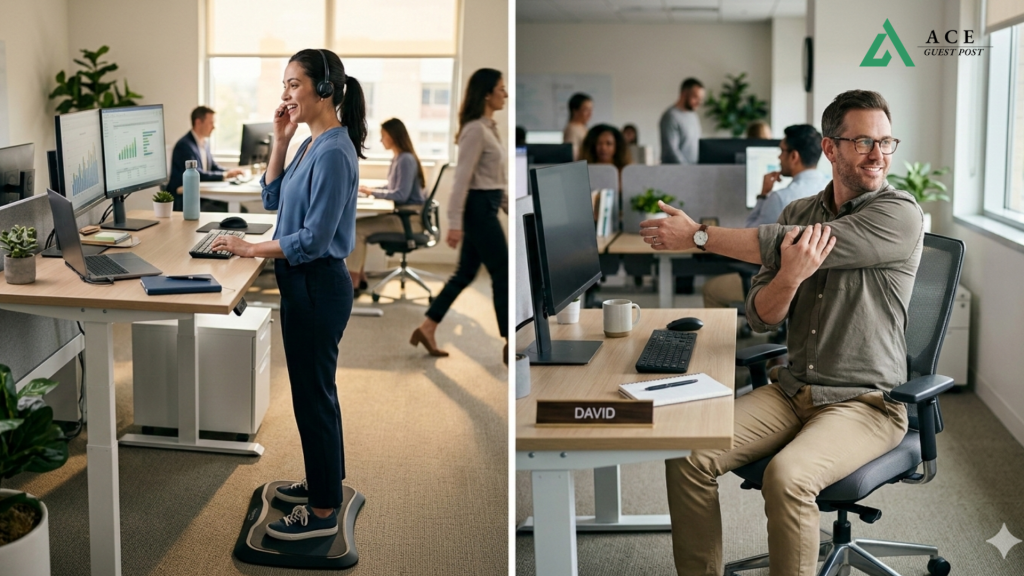
A good setup helps you move more naturally. If you have the option, use a height-adjustable standing desk. You do not have to stand all day. Switch between sitting and standing every 30 to 60 minutes. This change in posture keeps your core muscles engaged.
If you must sit, check your ergonomics. Keep your feet flat on the floor. Your knees should be at a 90-degree angle. Place your screen at eye level so you do not lean forward. Posture correction reduces lumbar strain. It also makes it easier to stand up quickly. Choose a chair that supports the curve of your lower back. If your chair is flat, use a small pillow for support.
Use the Power of Micro-Breaks
Do not wait for your lunch hour to move. Take a “micro-break” every hour. Set a timer on your phone or computer. When it goes off, stand up and perform desk stretches for two minutes. Reach for the ceiling. Roll your shoulders back. Twist your torso gently from side to side. These short bursts of movement reset your focus. They wake up your nervous system.
You can also use these breaks for “eye yoga.” Look away from your screen. Focus on a distant object. This helps prevent the strain that leads to late-day headaches.
Master the “Active Meeting”
Meetings are a major part of the workday. They are also a great time for workplace wellness. If you are on a phone call, walk around the room. Use a wireless headset so you can move freely. If you have a one-on-one meeting, suggest a walking meeting. Fresh air and NEAT (Non-Exercise Activity Thermogenesis) often spark better ideas than sitting in a gray room.
During video calls where you do not need to be on camera, try standing up. You can even do gentle stretches while you listen. This keeps you from slouching into your chair for an hour.
Simple Office Exercises for Low-Impact Activity
You can work out without breaking a sweat or changing clothes. Try these office workouts throughout the day:
- Leg Raises: While sitting, straighten one leg under your desk. Hold it for five seconds. Repeat with the other leg. This strengthens your quadriceps.
- Calf Raises: Stand behind your chair and hold the back for balance. Stand on your feet and slowly come back down. This helps the blood flow back up through the legs.
- Desk Push-Ups: Place your hands on the edge of a sturdy desk. Step back and slowly do ten push-ups. This strengthens your legs and buttocks.
- Glute Squeezes: Press your buttocks tightly for ten seconds, then release. This prevents “dead butt syndrome” or inactivity of the buttock muscles (gluteal amnesia).
- Seated Marches: Raise your knees one by one, as if you are marching while sitting. This improves the mobility of the hips.
- Wall Sits: Find a flat wall. Lean on it and slide down until your knees bend. Stay in this position for 30 seconds to activate the muscles of the legs.
Change Your Commute Habits
How you get to work matters. If you drive, park at the far end of the lot. Those extra steps add up over a week. If you take the bus or train, get off one stop early. Walk the rest of the way. If you live close enough, try biking. Starting your day with low-impact movement gives you more energy than a cup of coffee.
If you work from home, create a “fake commute.” Walk around the block before you sit down to start your emails. This creates a mental boundary between home life and work life.
Take the Stairs for Cardio
The elevator is a trap. It saves time but costs you health. Make a rule to always take the stairs if you are going up fewer than five floors. Climbing stairs is a great way to build leg strength. It improves heart health. This simple stair climbing workout burns more calories per minute than jogging. It is one of the easiest ways to get your heart rate up during the day.
Drink More Water and Stay Hydrated
Staying hydrated has a hidden benefit for movement. If you drink a lot of water, you will have to walk to the restroom more often. Also, use a small glass instead of a giant bottle. This forces you to walk to the kitchen or water cooler more frequently to refill it. These small trips keep your joints from locking up.
Drinking water also prevents snacking. Often, we feel hungry when we are actually just thirsty. Staying hydrated keeps your energy levels stable and your brain sharp.
Optimize Your Lunch Hour
Lunch should be about more than just eating. Eat your meal in twenty minutes, then use the rest of the hour to walk. Find a local park or just walk around the block. If the weather is bad, walk the halls of your building. Even a ten-minute walk after eating helps with blood sugar management. It prevents the afternoon energy crash.
Try to avoid eating at your desk. It is important to change your environment. Looking at something other than your monitor helps your brain rest. You will return to your work with a better attitude.
Create a “Movement Culture”
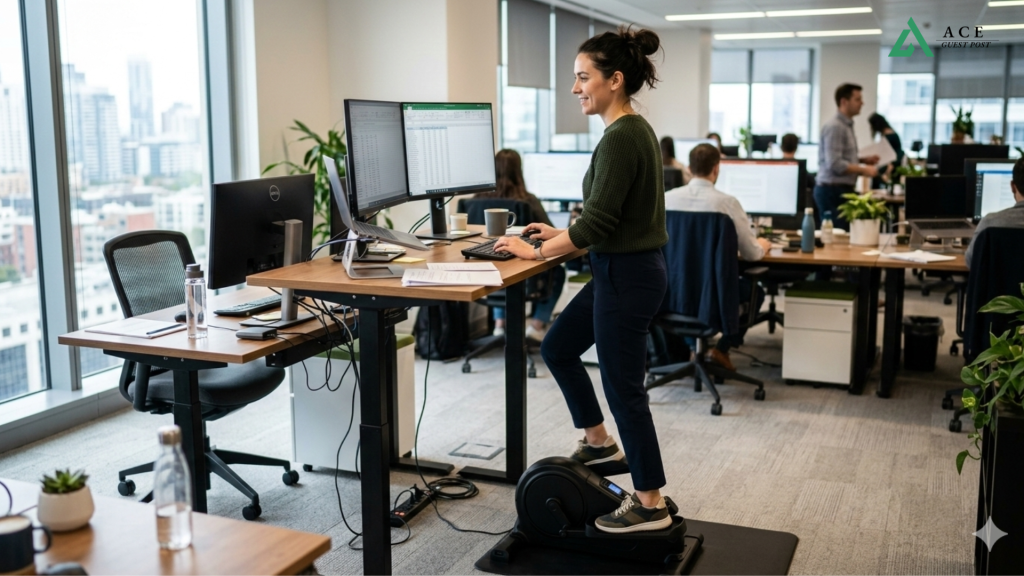
Talk to your coworkers about staying active. It is easier to move when others are doing it too. Start a step challenge in the office. Place a communal yoga mat in a corner for quick stretches. When movement becomes a shared goal, the office feels more energetic.
You can also suggest “standing huddles.” Instead of sitting in a conference room, stand in a circle for quick updates. These meetings tend to be shorter and more efficient.
Focus on Your Eye Health
Activity is not just about your legs. Your eyes get tired from staring at screens. Follow the 20-20-20 rule. Every 20 minutes, look at something 20 feet away for 20 seconds. This relaxes the eye muscles. It prevents computer vision syndrome and headaches. It also encourages you to shift your head and neck position.
Post-Work Recovery Routine
What you do after work matters too. Your body needs to unwind after eight hours of stress. Try a five-minute yoga flow when you get home. Focus on “opening” your chest and stretching your hip flexors.
Avoid going from a desk chair straight to a couch. Take a quick walk after dinner. This helps your body process the day. It also improves your sleep quality. Better sleep means more energy to stay active the next day.
Why Consistency Beats Intensity
You do not need to run a marathon after work to stay healthy. Short, frequent bouts of activity are often better for your body than one long workout. The goal is to avoid being “sedentary” for hours at a time. This approach to active sitting means you gain 40 minutes of activity by the end of the day.
Small changes are easier to keep up with. If you try to change everything at once, you might quit. Pick one or two habits and stick to them for a week. Once they feel normal, add another.
Summary of Daily Actions
To make this easy, follow this simple checklist:
- Stand up during every phone call.
- Use the stairs instead of the elevator.
- Park your car further away from the entrance.
- Set a timer to stretch every 60 minutes.
- Walk for at least 15 minutes during your lunch break.
- Do ten calf raises while waiting for the coffee to brew.
- Follow the 20-20-20 rule to protect your vision.
- Stand during at least one meeting per day.
Staying active at a desk job takes effort at first. Soon, these movements will become habits. You will notice that you have more energy in the evening. Your back will hurt less. Your mood will improve. Start with one or two changes today. Your body will thank you for it.