
Category: SEO

  • SGE Content Optimization: Your Guide to Search in 2026

    SGE Content Optimization: Your Guide to Search in 2026

    Search engines no longer just show links. They provide answers directly to the user. Google Search Generative Experience (SGE) has changed how we reach people online. In the past, you focused on getting a blue link to the top of a page. Now, you must focus on how an AI engine interprets your brand. Users want fast facts without clicking through five different websites. You must adapt your writing and technical setup to stay visible in this new world. This post explains how to win in this new era of search by speaking the language of both humans and machines.

    SGE Content Optimization

    What is Generative Engine Optimization (GEO)?

    Traditional SEO focuses on keywords and rankings. Generative Engine Optimization (GEO) focuses on being the source of truth for AI. AI models like Gemini and ChatGPT look for clear data. They want to cite experts who provide direct answers.

    To success at GEO, you must structure your content for AI consumption. Use direct language. Start your articles with a clear summary of the topic. AI tools prefer content that is easy to scan. If an AI can summarize your page, it will likely quote you as a source. This builds brand trust without a single click from the user.

    In 2026, search engines act as synthesizers. They pull facts from multiple sites to build one response. Your goal is to be the primary fact in that response. This means using clear headings and bullet points. Avoid long, winding stories that delay the point. Give the answer first and then explain the details. This structure helps AI crawlers find your value quickly.

    Zero-Click Content Strategy 2026

    By 2026, many users get answers without leaving the search page. This is the “zero-click” reality. You might worry about losing website traffic. However, being the answer in an AI overview is a huge success.

    A Zero-Click Content Strategy 2026 focuses on brand impressions. You want your name to appear in the AI response. Provide full answers in 50 words or less at the top of your page. Use tables and lists to help AI extract your data. This makes your brand the authority in the mind of the searcher. Users will remember your name when they are ready to buy.

    Think of your website as a library for AI. If the AI answers a user’s question using your data, your brand gains credit. You can track this through “share of voice” in AI summaries. Success is no longer about total site visits. It is about how often an AI mentions your business. This strategy builds a strong reputation that leads to higher quality leads later.

    Marketing Automation for AI Agents

    Marketing is now a talk between machines. Marketing Automation for AI Agents is the new standard for business growth. Your website must talk to the personal AI assistants of your customers. These agents look for products; compare prices, and book services.

    Use technical tags like Schema markup. These tags tell AI agents exactly what you sell. Automation tools now update these tags in real-time. This ensures AI agents always have your latest prices and stock levels. It removes the friction of manual updates. Your business stays ready for every digital query at any time of day.

    Automation also helps with personalization. When an AI agent asks for a solution, your site can provide a tailored response. This happens in milliseconds. By making your data easy for machines to read, you remove barriers to sale. This is the bridge between a simple search and a completed purchase.

    Ethical First-Party Data Strategies

    Privacy rules are stricter than ever. Third-party cookies are gone. You need Ethical First-Party Data Strategies to understand your audience. You cannot rely on outside tracking to find your customers.

    Collect data directly from your users with their clear consent. Use surveys, quizzes, and account sign-ups. Be honest about why you need the data. Give users something valuable in return, like a guide or a discount. This creates a fair trade between you and your audience.

    Good data helps you personalize content without breaking privacy laws. When users trust you, they share more information. This information lets you build better AI models for your own business. Trust is your most valuable asset in the 2026 economy. Respecting user boundaries is the best way to keep them coming back.

    Conversion Rate Optimization for AI Chatbots

    Traffic is only the first step in the sales funnel. You must turn visitors into buyers once they arrive. Conversion Rate Optimization for AI Chatbots is how you do it.

    Modern chatbots are not just for basic support. They are active sales tools. Optimize your bot to answer questions fast. A bot should guide a user to the right product in seconds. Use natural language that sounds helpful, not robotic.

    Make sure the bot can handle complex tasks. It should be able to book a demo or process a return. A fast, smart bot keeps users from leaving your site. If a user gets a fast answer, they are more likely to buy. You should test different bot scripts to see which ones close more deals. Small changes in how a bot greets a user can lead to big sales gains.

    Google E-E-A-T and AI Trust

    Google still values Experience, Expertise, Authoritativeness, and Trustworthiness (E-E-A-T). AI models use these signals to pick their sources. They want to avoid “hallucinations” or wrong info.

    Show your real-world experience. Use author bios with clear credentials and links to social profiles. Link to reputable outside sources to back up your claims. AI can tell the difference between shallow fluff and deep insight. Write for humans first, but keep AI needs in mind.

    Experience is the hardest thing for AI to fake. Share personal stories or case studies. Talk about what you learned from real projects. This unique content is what AI loves to cite. It proves you are a leader in your field. This type of quality content always successful in the long run.

    Building Content for the 2026 User

    The user in 2026 is impatient. They want the truth instantly. Your content must meet this need. This involves more than just text. You should include high-quality images and videos. These assets should have clear descriptions so AI can “see” them.

    Multimedia helps with GEO. If an AI assistant can show a video of your product in a search result, you win. Make sure your site loads fast on mobile devices. Most AI searches happen on phones. A slow site will be ignored by both humans and AI bots.

    The Role of Sentiment in Search

    AI is now very good at reading mood. It looks for “positive sentiment” when recommending brands. If your content is helpful and kind, AI will notice.

    Avoid aggressive sales pitches. Focus on solving the problems of your users. Helpful content naturally earns positive reviews and links. These signals tell search engines that your brand is safe and reliable. A friendly tone goes a long way in an AI-driven world.

    SGE Content Optimization

    Measuring Success in the SGE Era

    You need new metrics for 2026. Page views are not enough. Pay attention to the “citation rate.” This shows how often AI models name your site as a source.

    Track the “Brand Mention Volume” in the AI chat. This will tell you whether your zero-click strategy is effective or not. Use your original data to view users interactions with your chatbot. If they get answers and stay on the site, your optimization is working. Constant testing is the key to staying on top.

    Final Thoughts for 2026

    The search world is changing fast, but the basics of quality stay the same. You must look beyond simple clicks and focus on being the best source. Focus on authority and clarity in every post.

    Use automation to talk to AI agents and ethical data to know your fans. By optimizing for SGE, you ensure your brand stays relevant. This guide gives you the tools to lead in the age of AI. Start applying these strategies today to success the search wars of tomorrow.

    Frequently Asked Questions

    Q: How does GEO differ from standard SEO?

    A: Standard SEO targets rankings on a results page. GEO focuses on making your content easy for AI models to understand and cite. It prioritizes direct answers over keyword density.

    Q: Can a Zero-Click strategy actually lead to sales?

    A: Yes. Even if users don’t click, they see your brand as an expert. This increases awareness of the brand. When they’re ready to buy, they’ll specifically search for your brand.

    Q: Why is first-party data better than third-party data?

    A: Direct data is more accurate because it is obtained directly from your users. It is also more ethical and complies with privacy laws. This creates a deeper level of trust with your audience.

    Q: What is the most important part of optimizing a chatbot?

    A: Speed and helpfulness are the most important factors. A bot must solve a user’s problem or answer a question in seconds. It should feel natural and lead the user toward a solution.

    Q: How does AI determine if a source is trustworthy?

    A: AI looks for clues such as biographies of experts, links to reputable sites, and high-quality data. It also checks for “positive sentiment” in user reviews and mentions on the web.
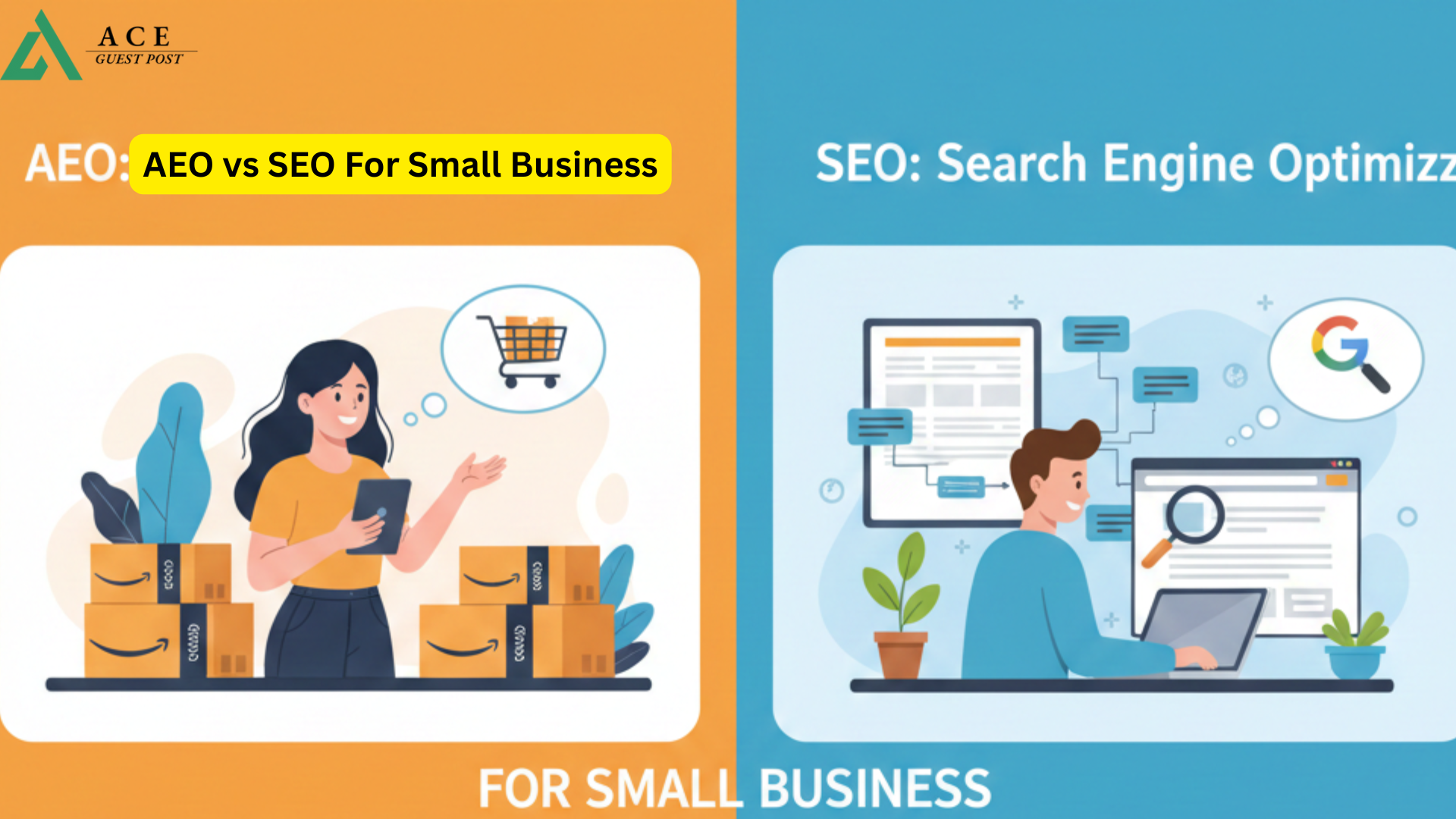
  • AEO vs SEO For Small Business

    AEO vs SEO For Small Business

    Getting found online is changing. You might know about SEO. It has helped businesses for years. Now, a new player named AEO is here. Both help people find you on the web. Small business owners need to know the difference. This post explains how to use both to get more customers.

    AEO vs SEO for small business

    The Shift in How People Search

    In the past, people typed short words into a box. They might type “pizza Chicago.” Then they would look at a list of sites. They would click a link and read. This is the world of SEO.

    Today, people talk to their devices. They ask, “Where can I get the best thin-crust pizza in Chicago right now?” They expect one perfect answer. They do not want to hunt through a list. This is why AEO matters.

    What Is SEO?

    SEO stands for Search Engine Optimization. It helps your website rank high on Google. When someone types a search, you want your link to show up first. SEO focuses on clicks. You want people to visit your site. Once there, they read your content or buy your goods.

    Keywords and Traffic

    You use keywords that match what people type. If you sell shoes, you use words like “running shoes” or “leather boots.” You want to cast a wide net. SEO brings many people to your door. It builds a path from the search page to your home page.

    Site Health

    You also make sure your site loads fast on phones. Google checks if your site is safe. They look at how long people stay on your page. If people leave fast, Google thinks your site is not helpful. Good SEO keeps people around to learn more about you.

    What Is AEO?

    AEO stands for Answer Engine Optimization. This is about AI and voice search. Think about Alexa, Siri, or ChatGPT. People ask these tools direct questions.

    The Goal of the Answer

    AEO does not focus on links. It focuses on the answer. The goal is to be the one answer the AI gives the user. If a bot picks your text, you gain trust. You become the expert in the eyes of the machine.

    Beyond the Click

    Sometimes, AEO leads to a “zero-click” search. This means the user gets the answer without visiting your site. Some owners find this scary. But being the chosen answer is a win. It keeps your brand in the mind of the customer. It shows you have the facts they need.

    The Main Differences

    SEO and AEO have different goals. SEO wants to show a list of options. AEO wants to give the single best result.

    Content Length

    SEO uses long articles to explain topics. You might write 2,000 words on “How to Paint a House.” This shows Google you know a lot. AEO uses short, clear facts. It might just be two sentences on “What is the best temperature to paint a house?”

    Success Metrics

    SEO measures success by how many people click your link. You look at your traffic numbers every month. AEO measures success by brand mentions. You want AI to say your name when it answers a question. Both paths help you grow, but they work in different ways.

    Why Small Businesses Need AEO

    Most local searches are questions. Someone might ask, “Who is the best plumber near me?” Or they might ask, “What time does the flower shop close?”

    Local Impact

    AI tools pull these facts from the web. If your site is hard for AI to read, you lose that customer. You want to be the answer they hear. This is vital for shops that serve a local area. If you own a cafe, AEO helps people find your menu via voice search while they drive.

    Trust and Authority

    When an AI bot cites your business, it acts as a referral. People trust the top result. If ChatGPT says your shop has the best review that carries weight. It is like a digital word-of-mouth. Small businesses can use this to beat bigger brands.

    How to success at SEO in 2026

    Google still cares about quality. They look for E-E-A-T. This stands for Experience, Expertise, Authoritativeness, and Trustworthiness.

    Show Your Experience

    Write about what you know. If you fix cars, write about fixing cars. Share stories of real repairs you did. Use photos of your shop. This proves you are a real person with real skills. AI cannot fake true life experience.

    Build Trust

    Do not try to trick the search engine. Use clear headings. Make your site easy to navigate. Check that your contact info is correct on every page. Use a clear privacy policy. Links from other local sites also help build your authority.

    Technical SEO

    Keep your site simple. Use a clean design. Make sure your text is easy to read on a tiny screen. Use high-quality images but keep the file sizes small. Slow sites lose rankings fast.

    How to success at AEO

    To success at AEO, you must be direct. You need to speak the language of the bots.

    Question and Answer Format

    Use a “Question and Answer” format on your pages. Start a paragraph with a common question. Use a heading for the question. Give the answer in the very next sentence.

    Keep that answer under 40 words. AI loves this structure. It makes it easy for the bot to find the fact. Use bold text for key terms. This helps the AI identify the main point of your text.

    Structured Data

    Use “schema markup” on your site. This is a bit of code. It tells bots exactly what your data means. It marks your phone number, price, and address. It tells the bot, “This is a five-star review.” This code is like a map for AI. It helps them find the gems on your site without guessing.

    Better Together

    You do not have to pick just one. The best plan uses both. Think of SEO as your store and AEO as your sign out front.

    The Hybrid Strategy

    Use SEO to build a big library of info. This brings in people who want to learn. Use AEO to catch people who need a quick fix.

    When you write a blog post, add a summary at the top. This summary helps AEO. The rest of the post helps SEO. This dual path keeps you visible everywhere. You capture the “readers” and the “askers” at the same time.

    Maximizing Reach

    By using both, you cover all bases. Some people still like to browse on a laptop. Others only use a smart speaker. A combined plan makes sure you are there for both groups. It makes your brand look modern and ready for the future.

    Understanding the User Journey

    People go through stages before they buy. First, they have a problem. They ask a question. This is where AEO finds them. They might ask, “Why is my sink leaking?”

    Next, they want to compare solutions. They search for “best ways to fix a leaky sink.” This is where SEO brings them to your blog. Finally, they decide to hire a pro. They search for your brand name or your location. If you are present at every stage, you win the job. AEO starts the conversation. SEO builds the relationship.

    Common Mistakes to Avoid

    Many owners make things too complex. They use big words to sound smart. This hurts you in 2026.

    Avoiding Jargon

    Skip the “corporate speak.” Do not say you offer “innovative solutions.” Say you “fix things that break.” Bots prefer plain talk. Simple words are easier for AI to translate and summarize.

    Keeping Info Current

    Do not let your site get old. If your hours change, update them everywhere. If an AI gives an old address, you lose a sale. Check your site once a month to keep facts fresh.

    The Future of Search

    Search will keep changing. We will see more AI and more voice tools. But the core goal is the same. People want help. They want it fast.

    Small businesses that adapt will thrive. You do not need a huge budget. You just need to be clear. Treat your website like a helpful employee. It should answer questions and guide people to the right place.

    By focusing on the user first, you naturally please the bots. Both SEO and AEO will reward you for being helpful. Start small and keep building. Your future customers are already asking questions. Be the one who answers them.

    Frequently Asked Questions

    Q: Does AEO replace SEO?

    A: No. They work as a team. SEO builds your site’s traffic and authority. AEO helps you show up in AI answers and voice searches.

    Q: How long does it take to see results from AEO?

    A: It can be faster than SEO. If you provide a clear answer to a niche question, AI may pick it up in a few weeks.

    Q: Is AEO expensive for small businesses?

    A: Not at all. It mainly requires you to rewrite your content to be clearer. You do not need a big budget to be direct.

    Q: Will AEO reduce my website traffic?

    A: It might lead to fewer clicks for simple questions. However, the trust you gain leads to higher quality leads who really want to hire you.

    Q: Do I need to be a tech expert to use schema markup?

    A: No. Many website tools like WordPress have simple plugins. These help you add the code without writing it yourself.

  • Digital Marketing Automation Roadmap: A Guide for Toronto Businesses

    Digital Marketing Automation Roadmap: A Guide for Toronto Businesses

    Marketing has changed. You cannot do everything by hand anymore. Automation helps you grow without working more hours. It picks up the slack on boring tasks. This leaves you time for big ideas.

    Many brands in Ontario want to lead the market. They often look for SEO services in Toronto to help. But ranking is only one part of the plan. You need a clear path to turn visitors into buyers. This guide shows you how to build that path.

    Digital Marketing Automation Roadmap

    Why You Need a Digital Marketing Automation Roadmap

    A roadmap keeps your goals clear. It stops you from wasting money on tools you do not use. Most teams fail because they start too fast. They buy software before they have a plan.

    A good plan starts with your data. You must know who your customers are. You must know what they like to click. Automation uses these facts to send the right message. It makes your brand feel personal to every user.

    Without a map, you are just guessing. You might post on social media and hope for the best. You might send emails that no one opens. This digital marketing automation roadmap changes this. It gives you a step-by-step guide to success.

    Phase 1: Fix Your Foundation

    Do not automate a mess. If your website is slow, fix it first. If your content is old, update it. Google looks for helpful content. They want to see that you know your stuff. This is part of their E-E-A-T rules. It stands for Experience, Expertise, Authoritativeness, and Trust.

    Start by checking your current tools. Do you have a way to track visitors? You need Google Analytics 4. You also need a CRM. A CRM stores your customer info in one spot. This is the heart of your automation.

    Make sure your site is easy to use on a phone. Most people in Ontario shop from their mobile devices. If your site looks bad on a small screen, you lose money. A clean site is the best first step.

    Phase 2: Search Engine Optimization

    You need people to find you online. This is where SEO Toronto experts come in. They help you show up when people search for your business.

    Automation helps with SEO too. You can use tools to watch your rankings. Some tools find new keywords for you. They can even tell you when a link breaks. Keeping your site healthy is easier with these robots.

    High rankings build trust. When you appear at the top, people think you are the best. This helps your E-E-A-T score. It proves you are an authority in your field.

    Phase 3: Email and Lead Flows

    Email is still a power tool. But do not send the same blast to everyone. Use triggers. A trigger is an action a user takes.

    Maybe they download a guide. The system sends a thank you note right away. Two days later, it sends a tip. This is a lead flow. It nurtures the user until they are ready to buy.

    You can also track cart abandonment. If someone leaves your store, send a reminder. This brings back lost sales. It works while you sleep.

    Lead scoring is another great trick. You can give points to users who click your links. If a user gets 50 points, they are a hot lead. The system can then alert your sales team. This saves time for everyone.

    Phase 4: Social Media and Ads

    Managing social media takes a lot of time. Use a scheduler to plan your posts. This keeps your brand active every day.

    For ads, use smart bidding. AI can manage your budget for you. It puts your money where it gets the most clicks. This is very helpful for local SEO services in Toronto. It helps you win against big brands with more money.

    You can also automate your ad creative. Some tools test different pictures for you. They see which one people like most. Then, they show that picture more often. This makes your ads perform better over time.

    Phase 5: Customer Service Bots

    People want answers fast. They do not want to wait for an email reply. Chatbots can help.

    A bot can answer common questions. It can tell people your store hours. It can help them track a package. This keeps your customers happy. It also keeps your inbox clean.

    If the bot cannot answer, it sends the chat to a human. This is the best of both worlds. You get the speed of a bot and the care of a person.

    Phase 6: Test and Update

    Your roadmap is never truly done. You must look at your reports every month. See what works and what does not.

    Maybe your emails have low click rates. Change the subject line. Test two different versions. This is called A/B testing. Automation makes this easy to do.

    Always keep your content fresh. Google likes sites that stay current. If you stop updating, your rankings will drop. Use tools to find “content gaps.” These are topics your customers want to know about.

    Professional Tips for Success

    • Start small: Pick one task to automate first. Do not try to do everything in one week.
    • Focus on the user: Do not be annoying with too many messages. Send things that actually help them.
    • Be human: Use automation for speed, but keep your voice real. People can tell when a robot is talking.
    • Watch your data: Bad data leads to bad results. Clean your email list once a year.
    • Hire help: If this feels like too much, find a pro in SEO Toronto. They can set up the tech for you.
    • Integrate your tools: Make sure your email tool talks to your CRM. If they do not share data, automation fails.
    • Set clear KPIs: Know what success looks like. Is it more clicks? Is it more sales? Track it.

    How to Get Started Today

    Look at your daily tasks. Which ones do you hate? Which ones take too much time? Start there.

    You might start with an automated welcome email. Or you might use a tool to track your SEO services in Toronto results. Each small step builds your roadmap.

    The future of marketing is smart. It is fast and personal. By using this digital marketing automation roadmap, you stay ahead of the crowd. You build a business that lasts.

    Digital Marketing Automation Roadmap

    Deep Dive: Nurturing Your Leads

    Lead nurturing is the secret sauce. Most people are not ready to buy the first time they see you. They need to trust you first.

    Send them a helpful blog post. Share a video of how your product works. Ask them a question. This builds a relationship over time.

    Automation makes this easy to scale. You can nurture 10 people or 10,000 people. The effort is the same for you. This is how small businesses in Toronto grow into big ones.

    Why Local Context Matters

    Toronto is a busy city. People have many choices. You must stand out from the rest. Using local keywords helps.

    When you look for SEO Toronto, you want someone who knows the area. They know the streets. They know the culture. Your automation should reflect this too.

    Maybe you send a special offer during a local holiday. Or you mention a popular local park. These small touches make your automation feel less like a machine. They make it feel like a local friend.

    Future-Proofing Your Strategy

    Technology never stops moving. New tools come out every month. Your roadmap must be flexible.

    Always keep an eye on new trends. But do not chase every shiny object. Stick to what works for your users.

    A solid foundation is the best defense. If your site is fast and your content is great, you will be safe. Automation just makes your hard work go further. It is the fuel for your marketing engine.

    Final Thoughts on Your Strategy

    Automation is not a robot taking over. It is a tool to help you reach more people. It allows you to focus on your craft.

    Your roadmap should grow as you grow. Start with the basics like SEO and email. Then, move into ads and bots. Every step makes your business stronger.

    Remember, the goal is to help the user. If your automation helps them, you will win. If it annoys them, you will lose. Keep your focus on the person behind the screen.

    The Bottom Line

    Building a roadmap takes effort. It requires a mix of tech and strategy. But the rewards are worth it. You get more leads and more sales. You get your time back.

    Focus on your foundation first. Use SEO to get seen. Use email to stay close to your fans. Always put the user first. If you follow these steps, you will win the market. Your brand will grow. Your customers will be happy. Start your automation journey now. It is the best gift you can give your business.